TULWAR, Sword
Sword: 18th century; Blade: 16th century
India – Mughal Period (1526-1858)
Steel, gold, iron
Full Length: 85 cm; Blade Length: 73 cm
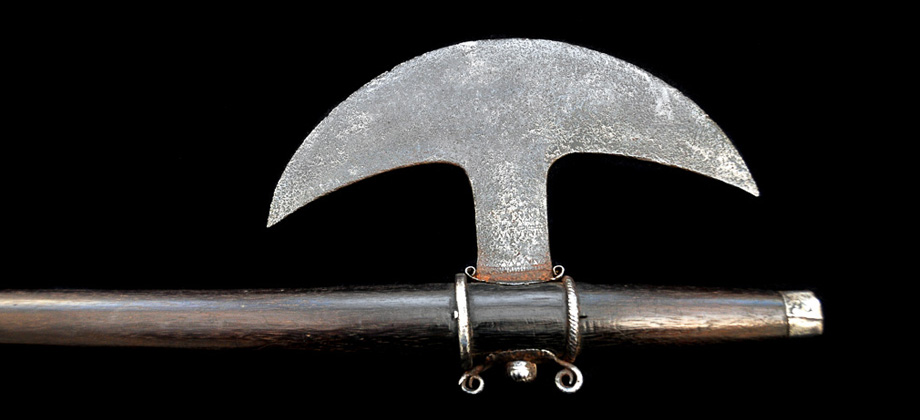
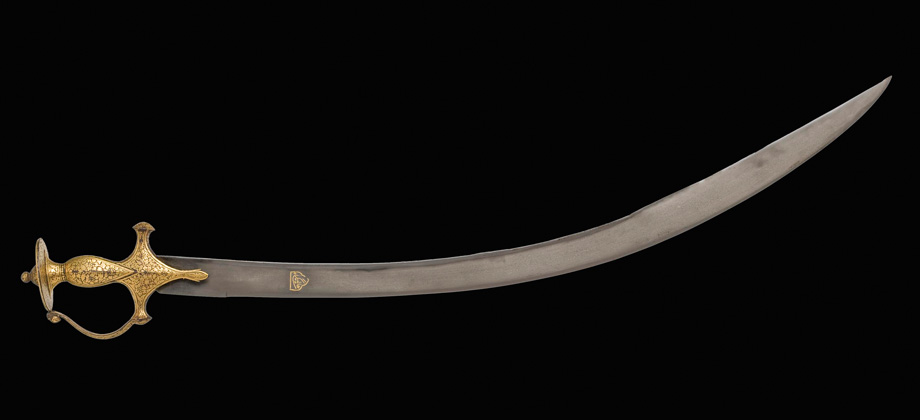
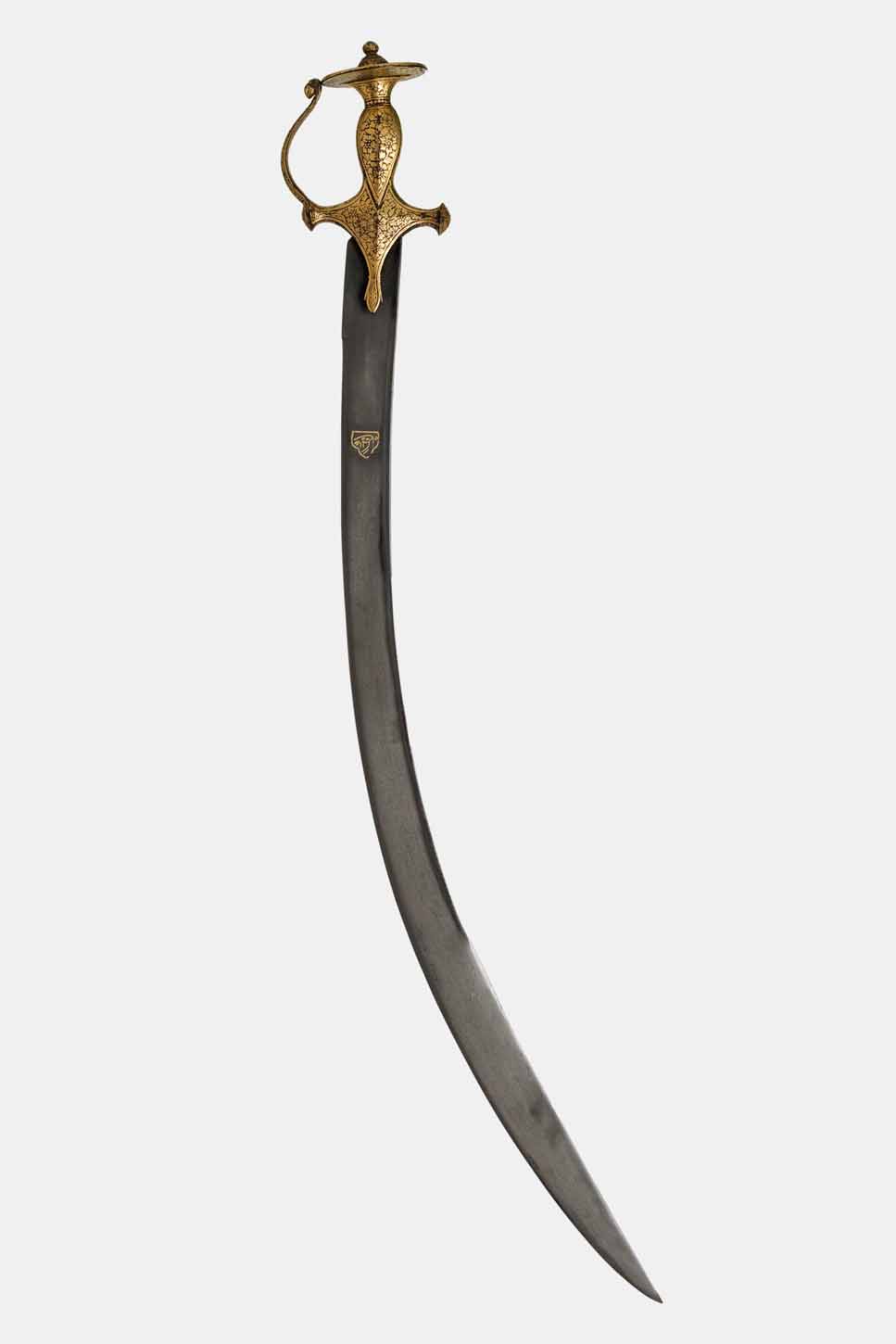
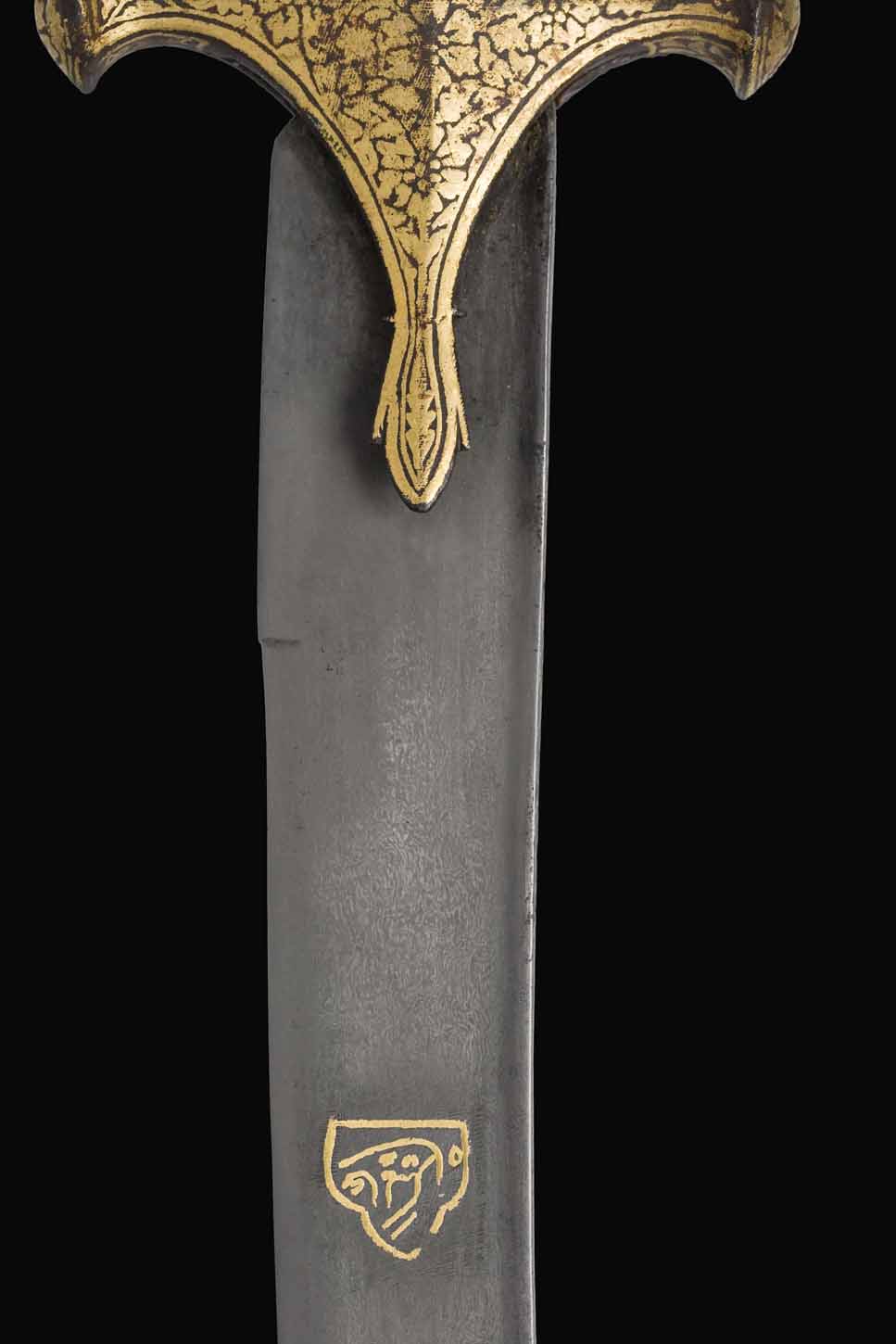
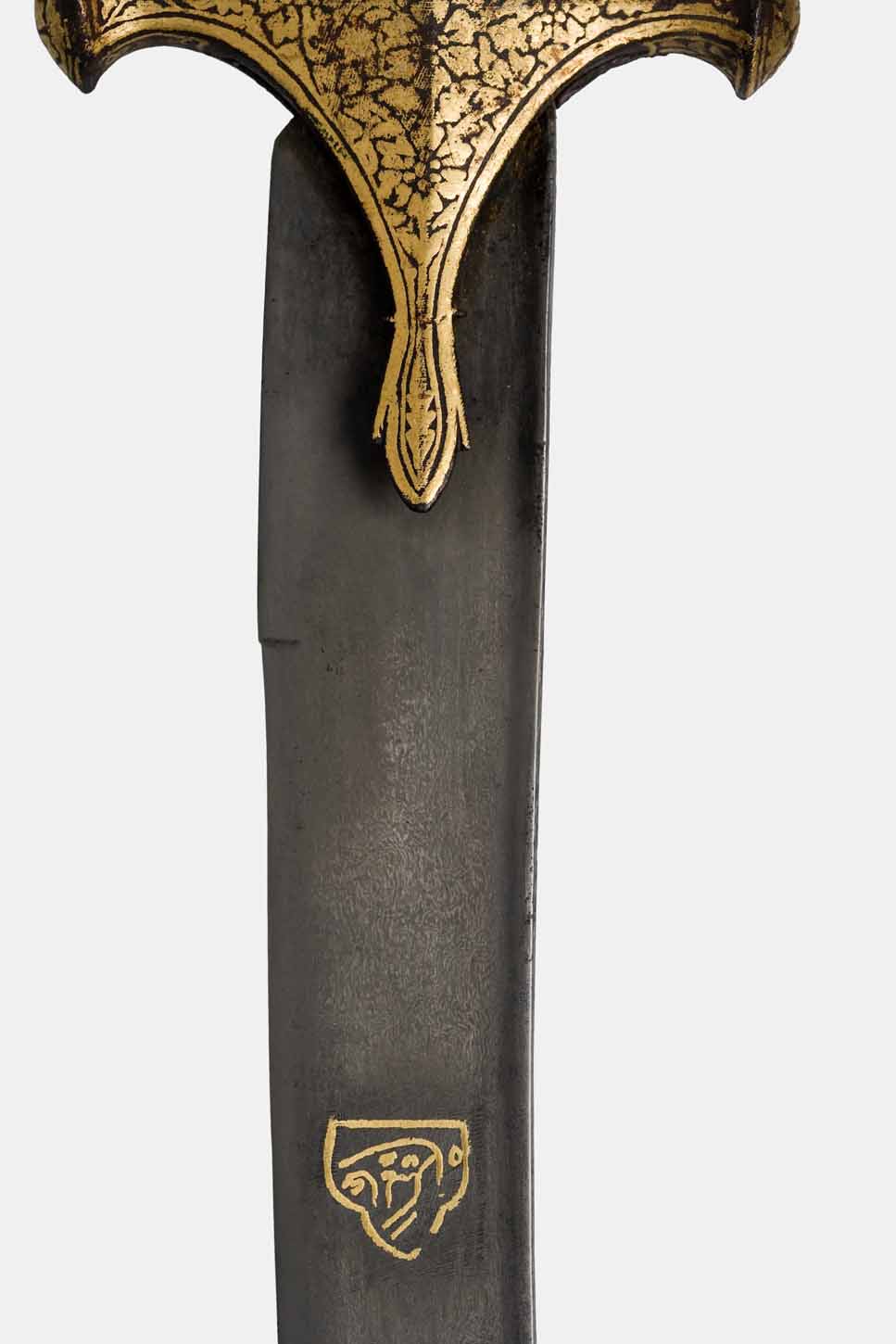
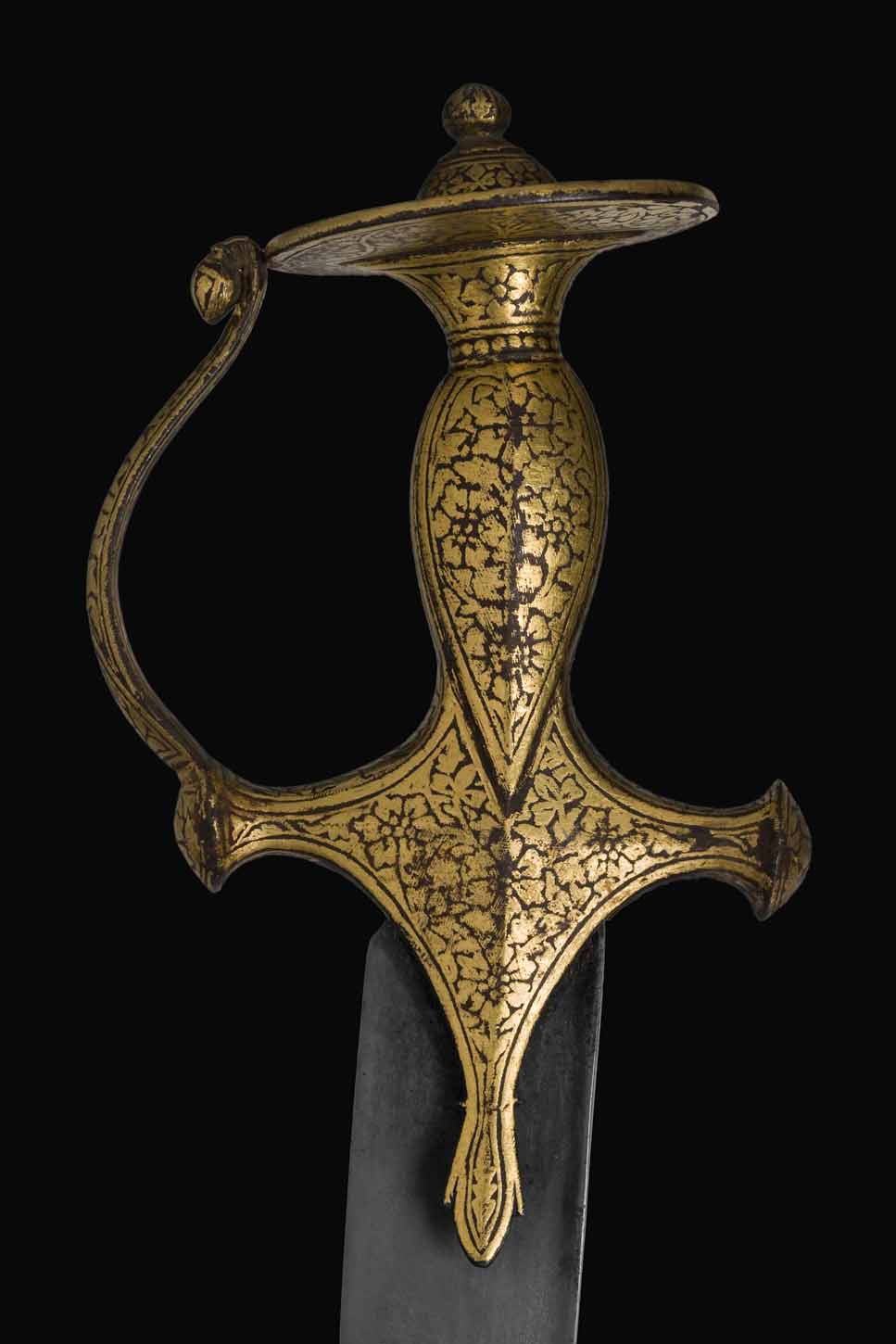
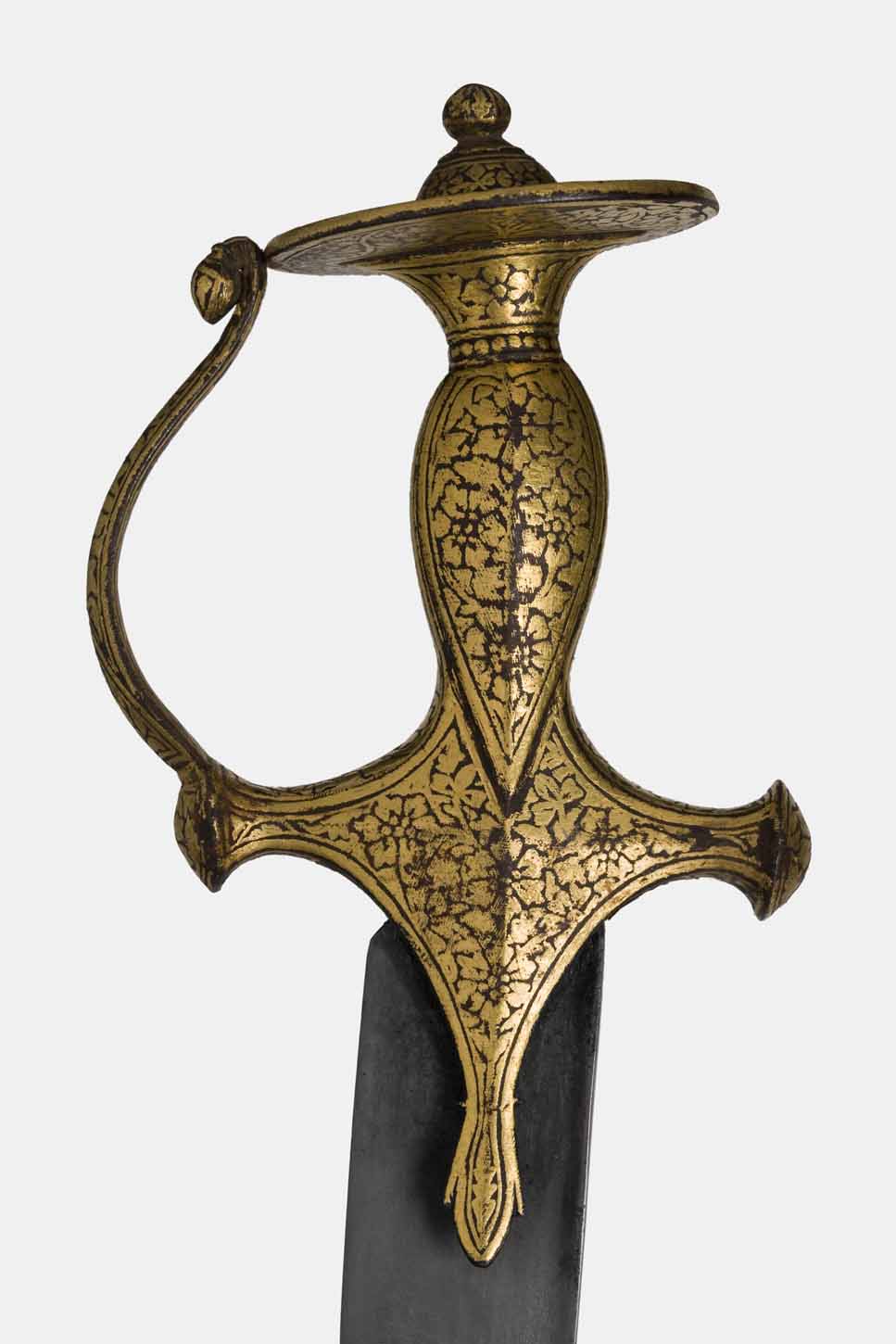
This Tulwar made in the 18th century has a curved blade with one edge in watered steel (a pattern frequently found in the 13th and 14th century in the Delhi Sultanates). The non-edged side is in the shape of a T and shows an engraved cartouche covered in gold with floral motifs. On one of the sides the blade shows an inscription where one can read: Shah-e-Alamgir “The King [who is] a conqueror of the world”. Shah Alamgir I or Awrangzeb was the second son of Shah Jahan (r.1658-1707). The iron hilt, in the typical model with the guard connected to the pommel’s disk, is completely ornamented with engraved and gold incrusted floral motifs.
Bibl.: Cameron Stone, 1999, pp. 601-602, fig. 770/6; Tirri, 2004, p. 328, fig. 249C
TULWAR, Espada
Espada: séc. XVIII; Lâmina: séc. XVI
Índia – período Mogol (1526-1858)
Aço, ouro, ferro
comp. total: 85 cm; comp. lâmina: 73 cm
Este Tulwar, executado no século XVIII, exibe uma lâmina curva de um só gume em aço damasquino (padrão frequentemente usado nos séculos XIII a XIV nos Sultanatos de Deli), com um só gume. O contra gume em "T", mostra uma cartela gravada com motivos florais revestidos a ouro. Num dos lados, a lâmina mostra uma inscrição onde se lê: Shah-e-Alamgir “O Rei [que é] um conquistador do mundo”. O Xá Alamgir I ou Awrangzeb, era o 2º filho do Xá Jahan (r.1658-1707).
O punho em ferro, no modelo típico com a guarda unida ao disco do pomo, está completamente ornamentado com motivos florais gravados e incrustados a ouro.
Bibl.: Cameron Stone, 1999, pp. 601-602, fig. 770/6; Tirri, 2004, p. 328, fig. 249C


 Click to share thisClick to share this