KARD, Dagger
circa. 1800
Persia (Iran) – Qajar period (1779 -1925)
Steel, ivory and walrus ivory, gold, leather, brass
Full length: 35, 5 cm; blade length: 21 cm
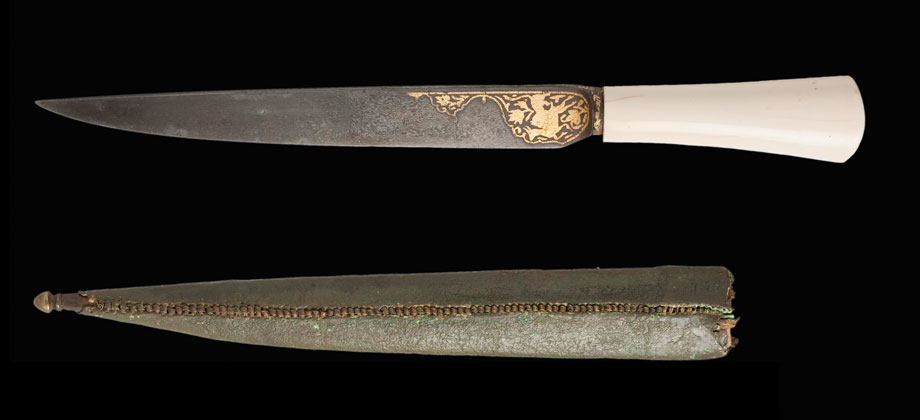
The single edged blade of this Kard, in watered steel with a well defined kirk narduban pattern (also called the “Prophet’s Ladder”, for the series of transversal grooves added later over the original damascene pattern) displays, on both sides, an engraved and gold covered ornamentation, inserted in an irregular cartouche with the representation of a lion capturing a deer, surrounded by foliage.
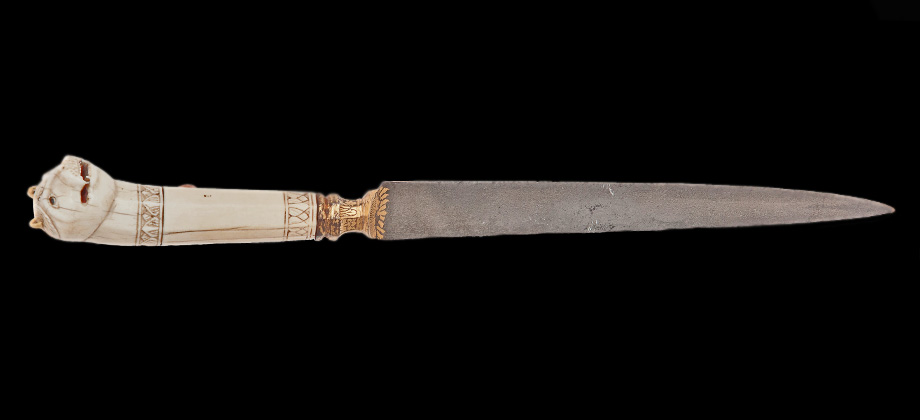
The hilt is built over the fitting of the blade, with a plaque of elephant ivory on one side, and a plaque of walrus ivory on the other.
The scabbard is from the same time, made of leather and backstitched in a spiral shape. The end displays a brass tip in the shape of a floral bud.
Bibl.: Christie’s, Art of the Islamic and Indian Worlds (Auction Catalogue), London, October 10, 2006; Cameron Stone, 1999, p. 336-337, fig. 422/2; Khorasani, 2006, pp. 234, 612, fig. 254c, cat. 249;
KARD, Adaga
ca. 1800
Pérsia (Irão) - período Qajar (1779 -1925)
Aço, marfim de elefante e de morsa, ouro, couro, latão
comp. total: 35,5 cm ; comp. lâmina: 21 cm
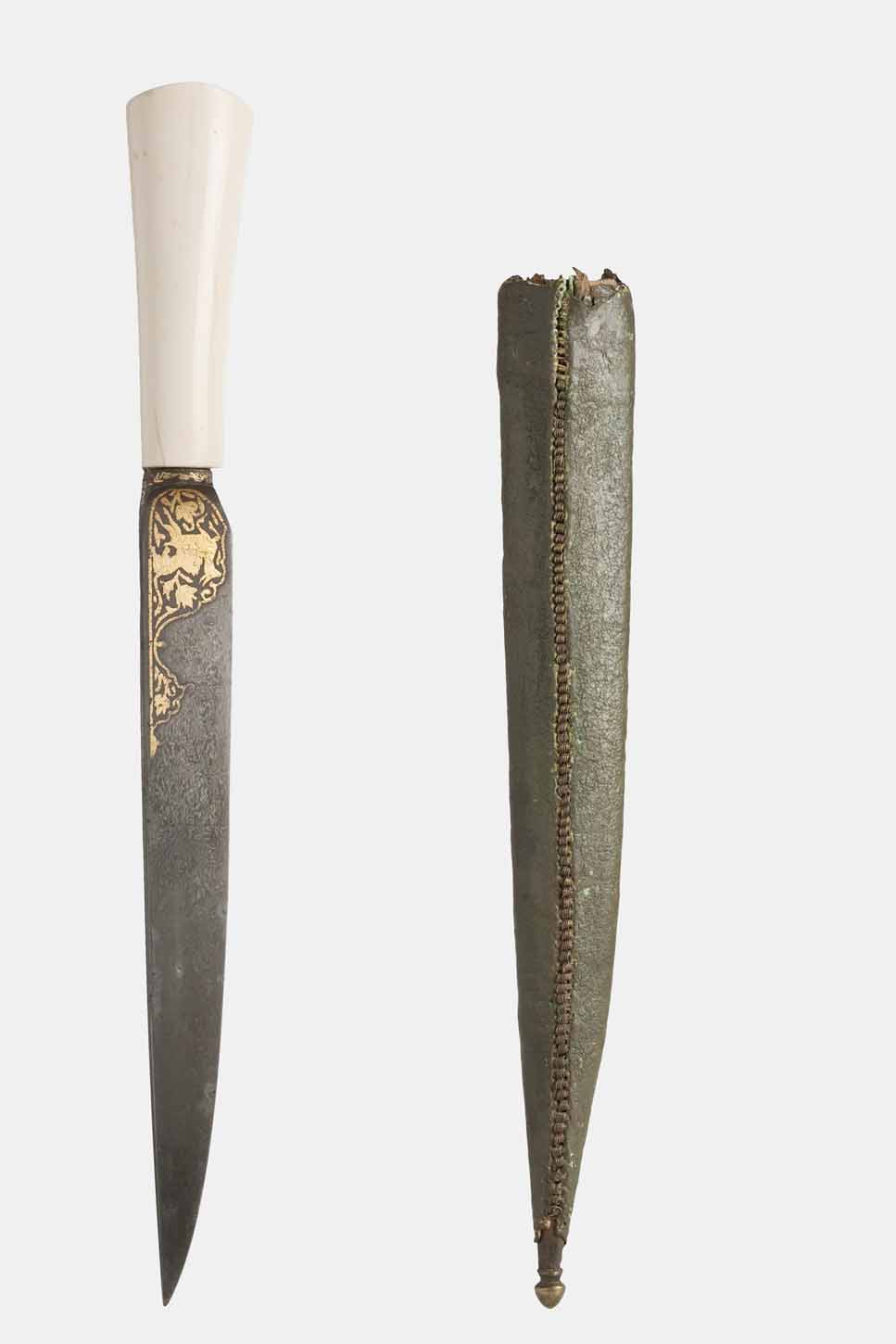
A lâmina deste Kard é de um só gume e em aço damasquino, com padrão bem definido, kirk narduban, designado também por a “Escada do Profeta”, devido à série de sulcos transversais, executados posteriormente, sobre o padão matriz damasquino. Mostra dos dois lados, uma decoração gravada e revestida a ouro, inserida em reserva irregular onde está representado um leão a capturar um veado, ladeados por folhagens.
O punho está construído sobre o encaixe da lâmina, revestido por uma placa em marfim de elefante, num lado, e por uma placa em marfim de morsa, no outro lado.
A bainha da mesma época, é de couro e está pespontada em espiral. Termina numa ponteira em latão com o formato de um rebento floral.
Bibl.: Christie´s, Art of the Islamic and Indian Worlds (catálogo de leilão), London, October 10, 2006; Cameron Stone, 1999, p. 336-337, fig. 422/2; Khorasani, 2006, pp. 234, 612, fig. 254c, cat. 249;


 Click to share thisClick to share this