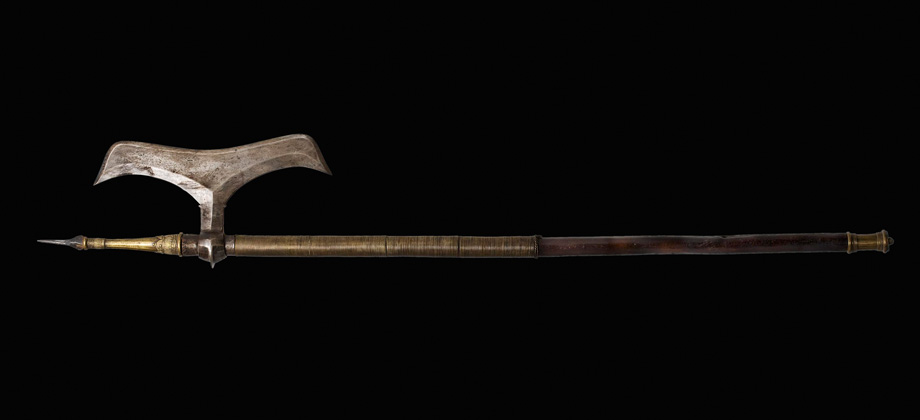
BULLOVA, Battle Axe
Axe: ca. 1676-1725; Blade: ca. 1576-1625
India - Hindustan
Steel, wood, iron, copper wire, brass
Full length: 102 cm; blade length 26 cm
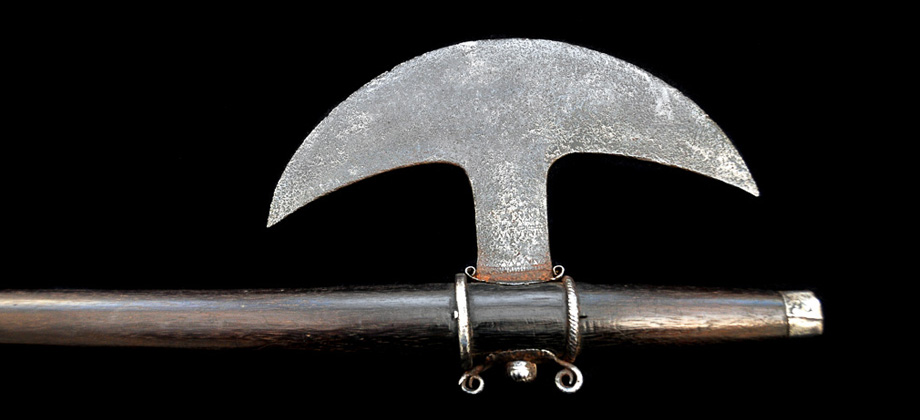
The Bullova is a sort of Indian battle axe, used by the tribes of Chota Nagpur, and which displays different shapes and sizes.
This is the weapon used by the infantry and which easily became a fearsome weapon, in the hands of an experienced warrior.
In this piece, which comes from Hindustan, the dating of this moustache-shaped blade can be dated to late 17th century, early 18th.
The hilt and the brass guards date probably from the 18th and 19th centuries. This difference in dates is frequent in this sort of weapon, passed down from fathers to sons, with several replacements of the more breakable parts.
This Bullova was part of a group conquered in the first half of the 19th century, which were then mounted, by the pair, in a large panoply.
There are other similar examples, of the same origin, in the Rainer Daehnhardt collection.
Bibl.: Cameron Stone, 1999, pp. 155-156, fig. 199/10; Tirri, 2004, p. 336, fig. 253F
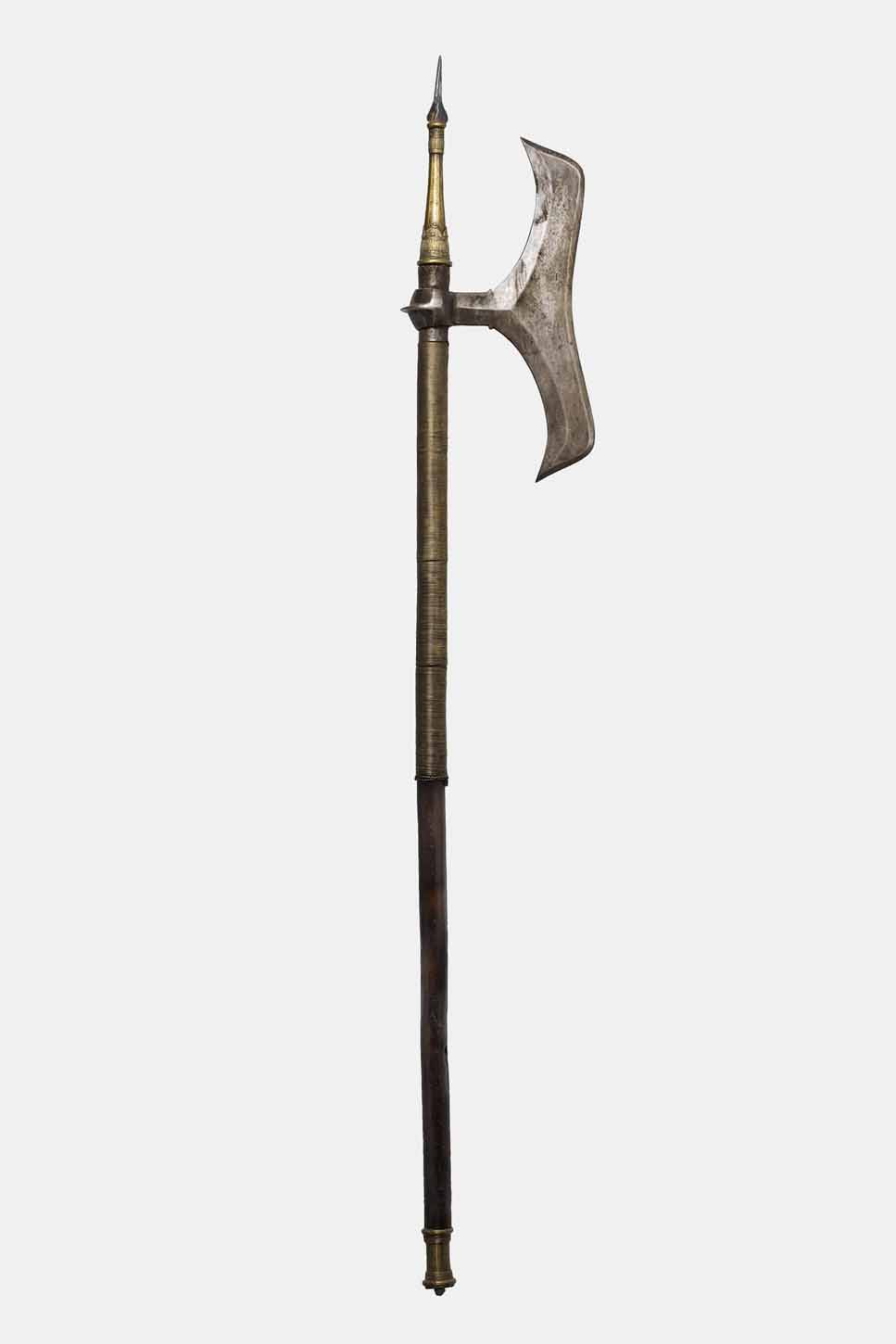
BULLOVA, Machado de combate
Machado: ca. 1676-1725; Lâmina: ca. 1576-1625
Índia - Hindustão
Aço, madeira, ferro, fio de cobre, latão
comp. total: 102 cm; comp. lâmina 26 cm
O Bullova é um tipo de machado indiano de combate, usado pelas tribos de Chota Nagpur que apresenta diversas formas e tamanhos.
Era a arma usada pela infantaria e que facilmente se tornava uma arma terrível, nas mãos de um guerreiro experiente.
Neste exemplar, proveniente do Hindustão, a datação da lâmina em bigode é atribuída a finais do século XVII e início do século seguinte.
O cabo e as guarnições de latão, datam provavelmente dos séculos XVIII a XIX. Esta diferença de datas, é frequente neste modelo de armas, herdadas de pais para filhos, com repetidas substituições das partes mais quebráveis.
Este Bullova, fazia parte de um grupo conquistado na primeira metade do século XIX e foi posteriormente montado, aos pares, numa grande panóplia.
Existem outros exemplares semelhantes e da mesma origem, na colecção Rainer Daehnhardt.
Bibl.: Cameron Stone, 1999, pp. 155-156, fig. 199/10; Tirri, 2004, p. 336, fig. 253F


 Click to share thisClick to share this